

The Best Way to Sear a Steak? Stop Using Non-Stick
If you could only own one pan, the answer isn’t non-stick. It’s Stainless Clad. More specifically: a 5-ply GLOBE HOME® Stainless Clad Pan.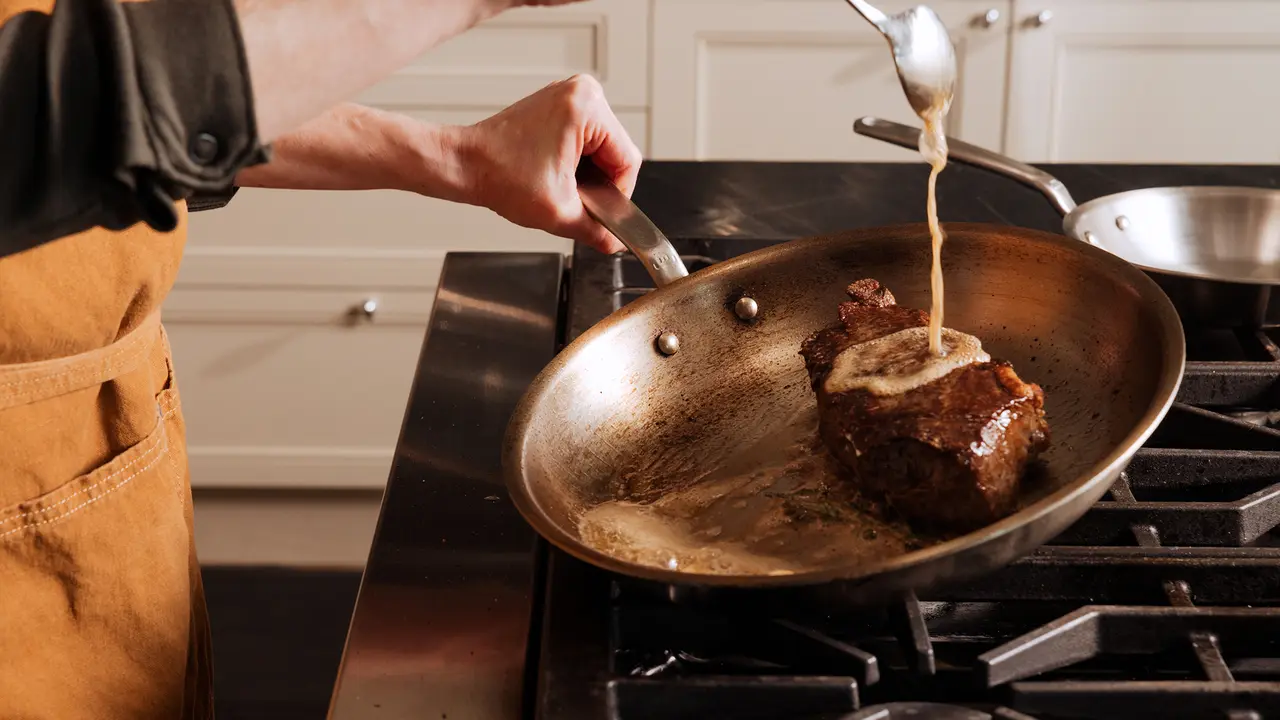
Table of Contents
- What pan should I be using?
- Why Your Steak Doesn’t Look Like the One at a Restaurant
- Why Stainless Steel Performs Differently
- What 5-Ply Construction Actually Means (And Why It Matters)
- How to Use Stainless Steel So Food Releases Naturally
- The Difference: Non Stick vs Stainless Clad
- Stainless Clad Isn’t Just for Steak
What pan should I be using?
If you could only own one pan — one pan to cook nearly everything in your kitchen — the answer isn’t non-stick.
It’s Stainless Clad. More specifically: a GLOBE HOME® 5-ply Stainless Clad Pan.
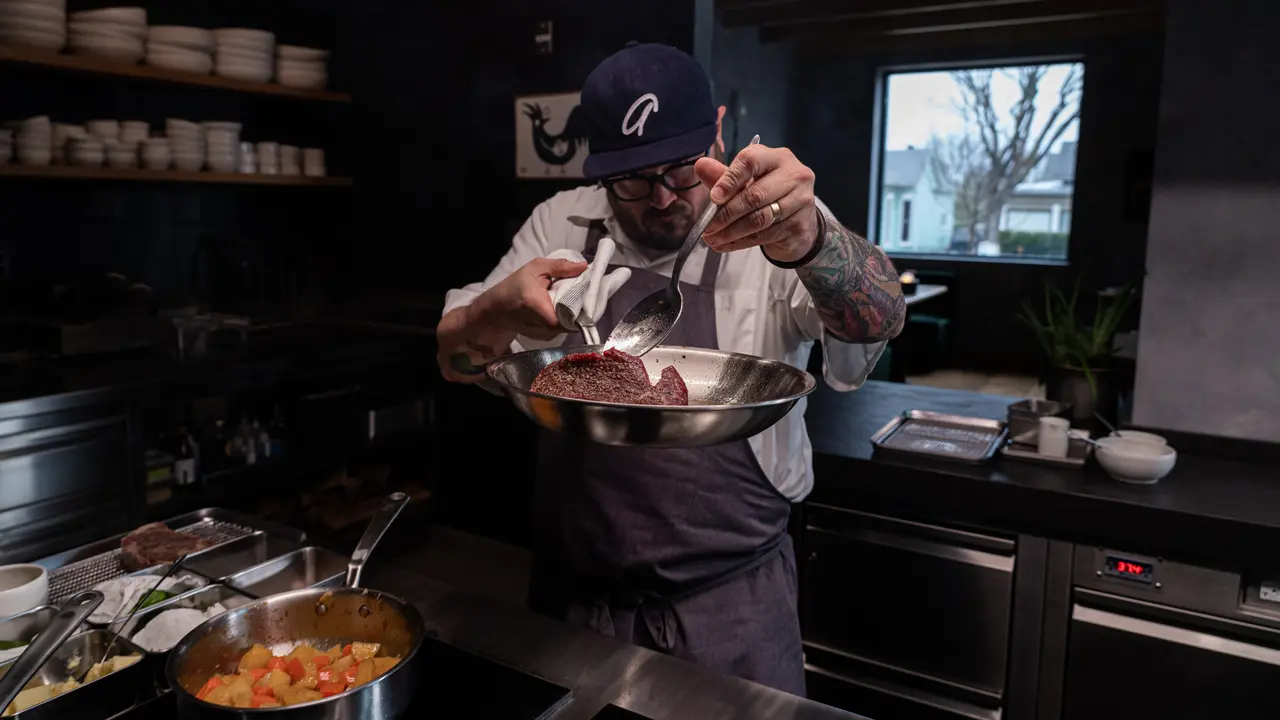
Over 3,000 Professional Chefs rely on GLOBE HOME’s Stainless Clad for a reason. It’s tough. It’s non-reactive. It’s built to last decades. There are no coatings to scratch, no chemicals to worry about, and no performance decline over time.
And when it comes to high-heat searing and building flavor? Nothing does it better.
If you want a true golden crust, this is the way to go.
Why Your Steak Doesn’t Look Like the One at a Restaurant
If you’ve ever wondered why your steak at home looks pale compared to one at a steakhouse, the pan is often the reason.
Non-stick pans are engineered to prevent food from sticking. That sounds helpful — until you understand how browning actually works.
Great searing depends on:
- High heat
- Direct metal-to-protein contact
- Surface moisture evaporation
- The Maillard reaction (the chemical process that creates deep browning and complex flavor)
Non-stick coatings limit heat. They’re not designed for sustained high temperatures. Push them too far, and they degrade. Over time, coatings scratch, chip, and lose performance.
And because non-stick reduces friction between food and the pan, it also reduces the kind of surface contact that produces a deep crust.
In other words: Non-stick prioritizes release. Stainless Clad prioritizes flavor.
That’s why restaurants don’t rely on non-stick for searing proteins. They use GLOBE HOME 5-Ply Stainless Clad.
Why Stainless Steel Performs Differently
Stainless Clad excels at the things that matter most when cooking proteins:
1. It Handles High Heat
You can safely preheat Stainless Clad for proper searing. High heat is essential for creating a crust before the interior overcooks.
2. It Creates Fond
Those browned bits that form on the surface of the pan? That’s fond. It’s concentrated flavor. Deglaze it with wine, stock, or butter, and you’ve built a pan sauce in seconds.
Non-stick rarely develops proper fond.
Stainless Clad does it naturally.
3. It’s Non-Reactive
Cooking with acidic ingredients — tomatoes, wine, citrus — won’t damage the surface or alter flavor.
4. It Doesn’t Wear Out
There’s no coating to fail. A quality stainless pan can last decades. Performance stays consistent.
The result is simple:
- Better browning.
- Better sauces.
- Better flavor.
What 5-Ply Construction Actually Means (And Why It Matters)
Not all Stainless pans perform the same.
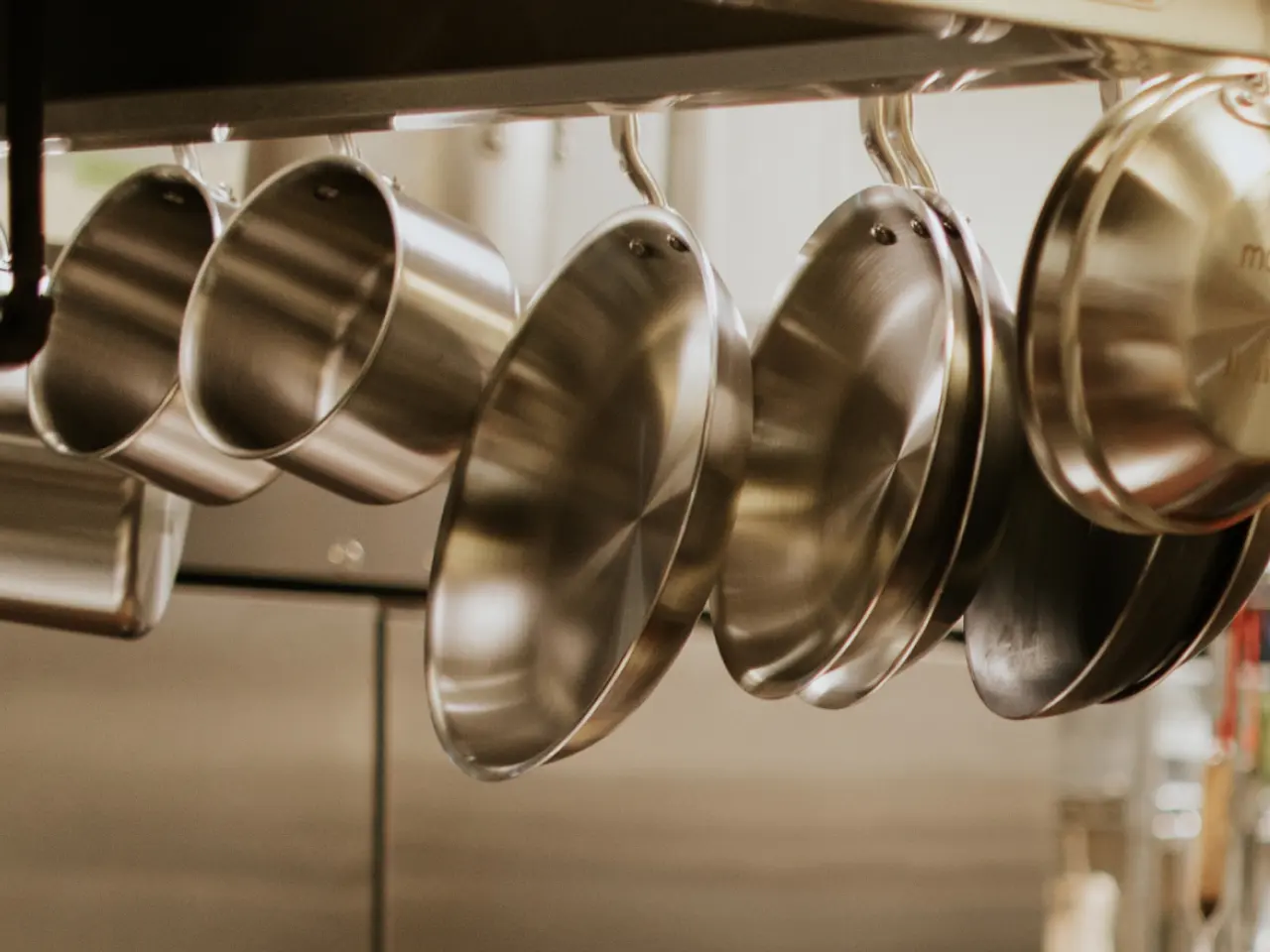
A high-quality 5-ply Stainless Clad pan uses multiple bonded layers of metal — typically alternating stainless steel and aluminum.
In a 5-ply construction, you get:
- Stainless steel exterior for durability and induction optimization
- Aluminum core layers for even heat distribution
- Stainless steel cooking surface for searing and durability
Why this matters:
Aluminum conducts heat efficiently and evenly. Stainless steel is durable and non-reactive, but less conductive on its own. By bonding them together, you get the best of both worlds:
- Fast, even heating
- Strong heat retention
- Reduced hot spots
- Responsive temperature control
- Induction optimization
That’s why a well-built GLOBE HOME® 5-ply Stainless Clad pan feels substantial — and performs consistently across the entire cooking surface.
“But Food Sticks…”
This is the biggest hesitation people have when switching from non-stick.
Yes — food can stick in stainless steel.
But here’s the key:
Stainless Clad is nonstick when used correctly.
The difference isn’t magic. It’s technique and requires a pan that holds consistent temperature, like a 5-ply Stainless Clad pan.
Here’s exactly how to do it.
How to Use Stainless Steel So Food Releases Naturally
Step 1: Preheat the Pan (Dry)
Place your new GLOBE HOME 5-ply Stainless Clad pan over medium heat. Let it heat up before adding anything.
How do you know it’s ready?
Add a small splash of water.
If the droplets bead up and “dance” across the surface instead of evaporating immediately, the pan has reached the proper temperature. This is known as the Leidenfrost effect — a signal that the surface is hot enough for searing.
If the water evaporates instantly, it’s too hot. If it splits into many tiny droplets and sputters, it’s too cool.
You’re looking for that smooth, dancing bead.
Step 2: Add Oil — After It’s Hot
Once the pan is preheated, add your oil or desired fat.
Let the fat heat until it shimmers.
Now you’ve created the right conditions for proper searing.
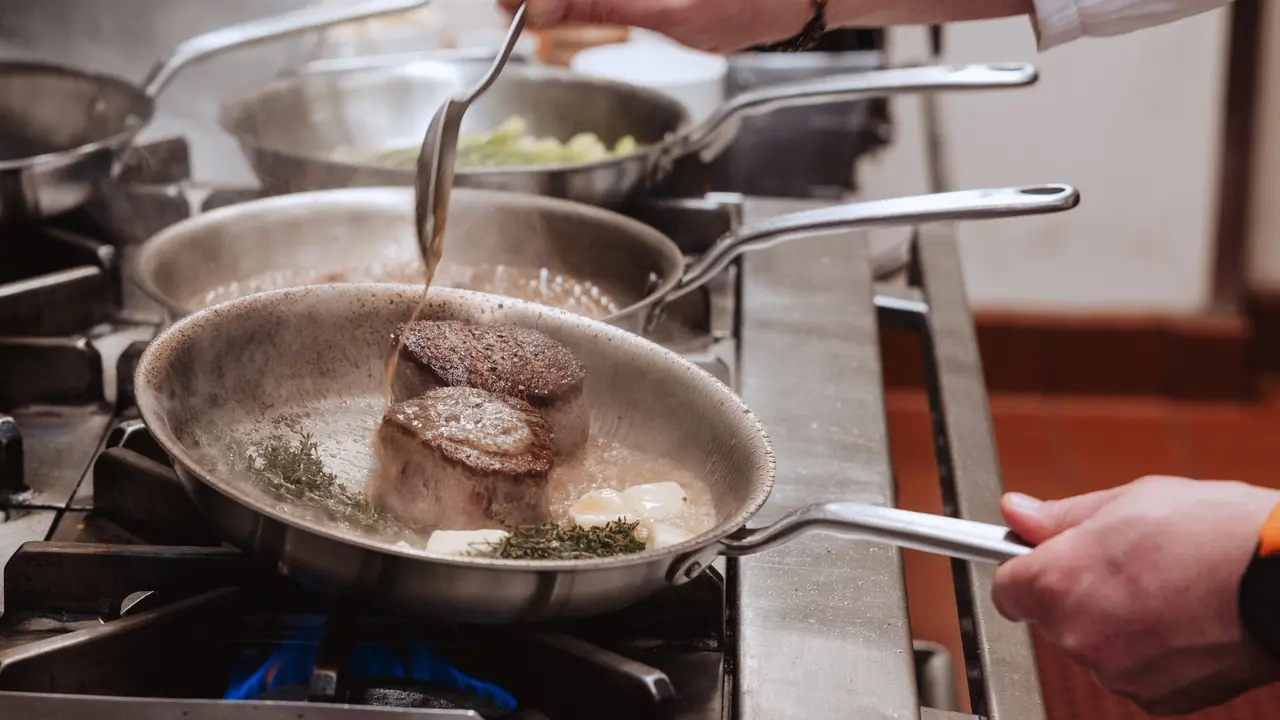
Step 3: Add the Food — And Leave It Alone
Place your steak (or chicken, vegetable, or fish) in the pan.
At first, it will stick.
That’s normal.
As the protein cooks and the crust develops, it will naturally release from the surface.
If you try to flip it too early and it resists, it isn’t ready.
When the crust is formed, it lifts easily.
Don’t force it.
Let the pan do the work.
Step 4: Let It Release
When it’s ready, the food will gently lift with minimal resistance.
That release is your signal that a proper crust has formed.
This is where stainless steel shines.
You’re not fighting the pan. You’re working with it.
The Difference: Non Stick vs Stainless Clad
Imagine two steaks side by side.
Cooked in Non-Stick:
- Lighter surface color
- Less aggressive browning
- Minimal fond
- Softer exterior
Cooked in Stainless Steel:
- Deep golden-brown crust
- Clear Maillard development
- Rich fond in the pan
- Crisp, flavorful exterior
The visual difference is immediate.
The flavor difference is even bigger.
That crust isn’t cosmetic. It’s chemistry. It’s texture. It’s depth.
It’s what makes restaurant steak taste like restaurant steak.
Stainless Clad Isn’t Just for Steak
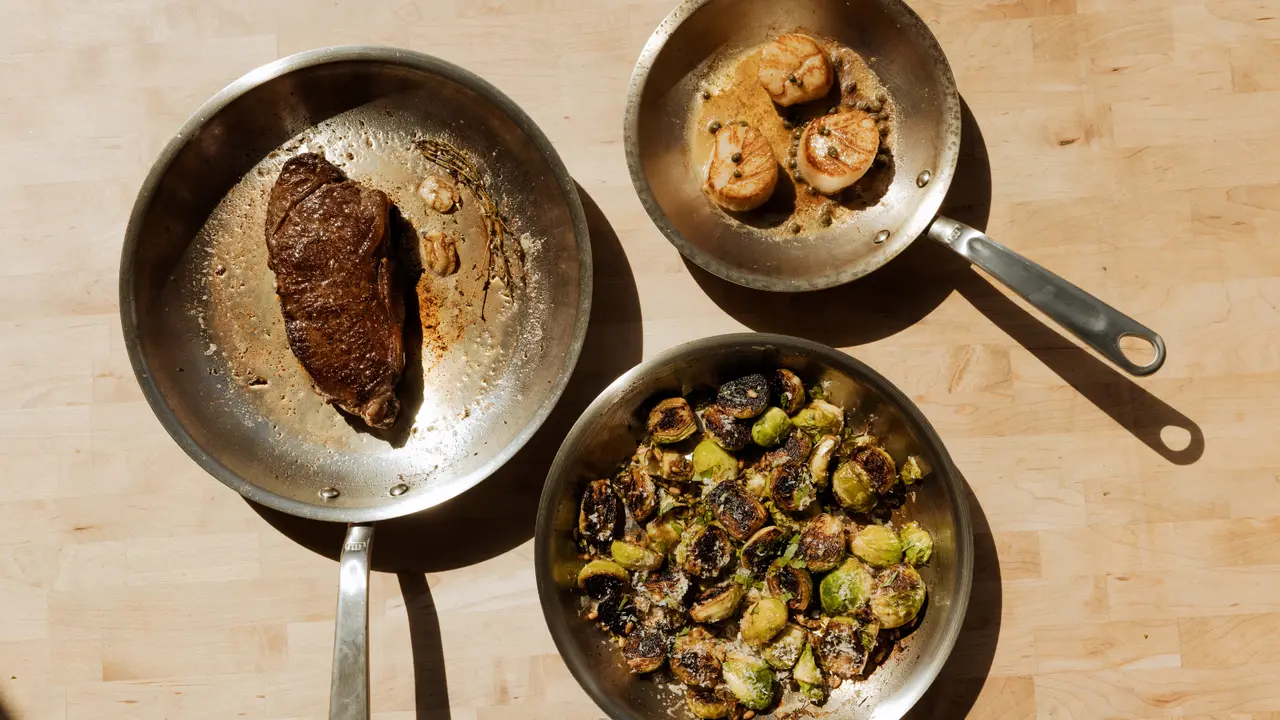
While searing is where stainless stands out most, it’s also the most versatile pan in your kitchen.
You can use it for:
- Searing chicken thighs
- Pan-roasting fish
- Browning ground meat
- Sautéing vegetables
- Building pan sauces
- Finishing dishes in the oven
- Cooking acidic ingredients
If you had to reduce your kitchen to one pan, stainless steel handles the widest range of tasks at the highest level.
Non-stick is a specialty tool.
Stainless is a foundation tool.
“Is It Hard to Clean?”
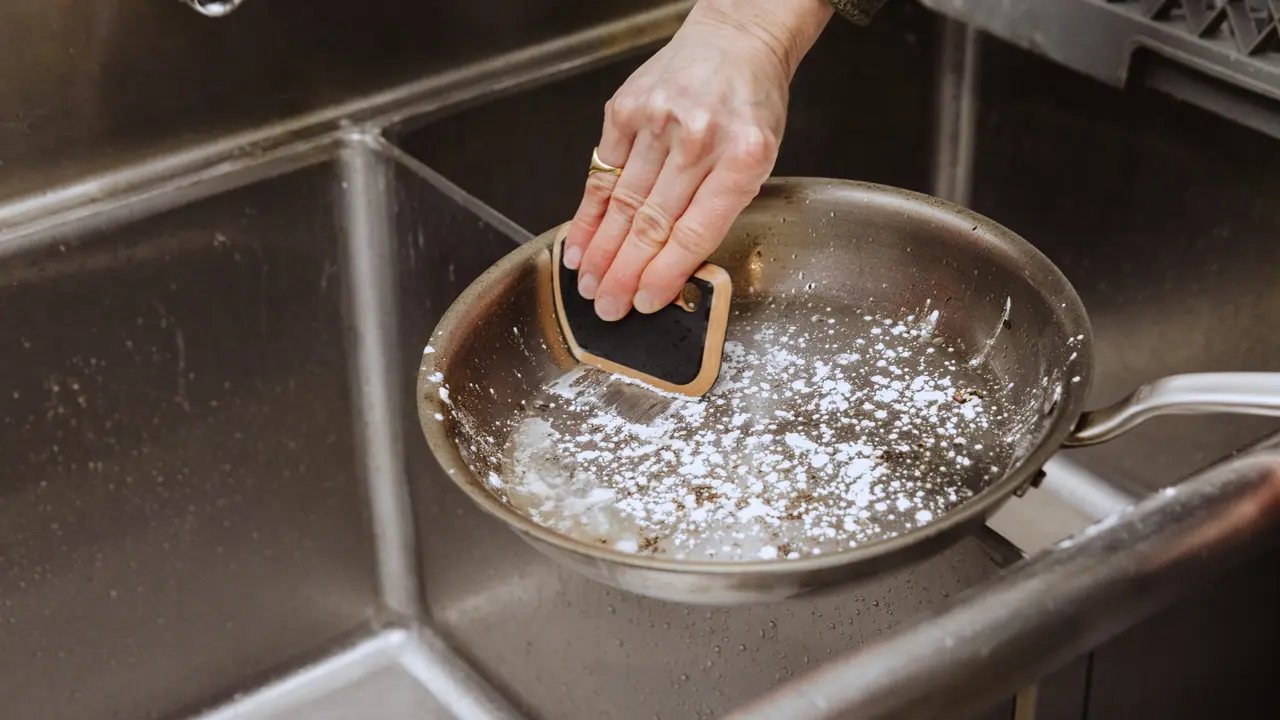
Another common concern.
The answer: no.
After cooking, deglaze the pan while it’s still warm — add liquid and scrape up the fond. Most residue lifts easily.
For stubborn marks, a mild abrasive cleaner restores the surface quickly.
Because there’s no coating, you’re not damaging anything. You’re maintaining solid metal.
“Isn’t Stainless More Expensive?”
Upfront, yes.
But consider replacement cycles.
Non-stick pans typically last 1–3 years before performance declines. Coatings wear down. Surfaces scratch.
A well-made 5-ply Stainless Clad pan can last decades.
If you replace non-stick multiple times over 10 years, you often spend more — and never get the same level of performance.
Stainless steel isn’t a short-term convenience purchase.
It’s a long-term investment in how you cook.
If You Care About Flavor, It’s Time to Upgrade
You should consider switching if:
- You cook steak, chicken, or fish regularly
- You want better browning and deeper flavor
- You’re tired of replacing scratched non-stick pans
- You want one pan that does nearly everything
- You care about durability over gimmicks